5 Signs Your Home Has a Hidden Moisture Problem
Moisture problems rarely announce themselves. Here are the signs that something is already developing inside your walls, floors, and structural materials — before it becomes visible.
Moisture problems in a home rarely announce themselves. By the time there is visible mold growth or a noticeable stain on the ceiling, the moisture causing it has typically been present for weeks, sometimes months. In Florida’s climate, where outdoor humidity averages between 70 and 90 percent for most of the year, the conditions that allow moisture to accumulate inside a structure are almost always present. The question is whether it is happening in yours.
These are five signs that often get dismissed, ignored, or attributed to something else — but each one can indicate a moisture problem that is already developing inside your walls, floors, or structural materials.
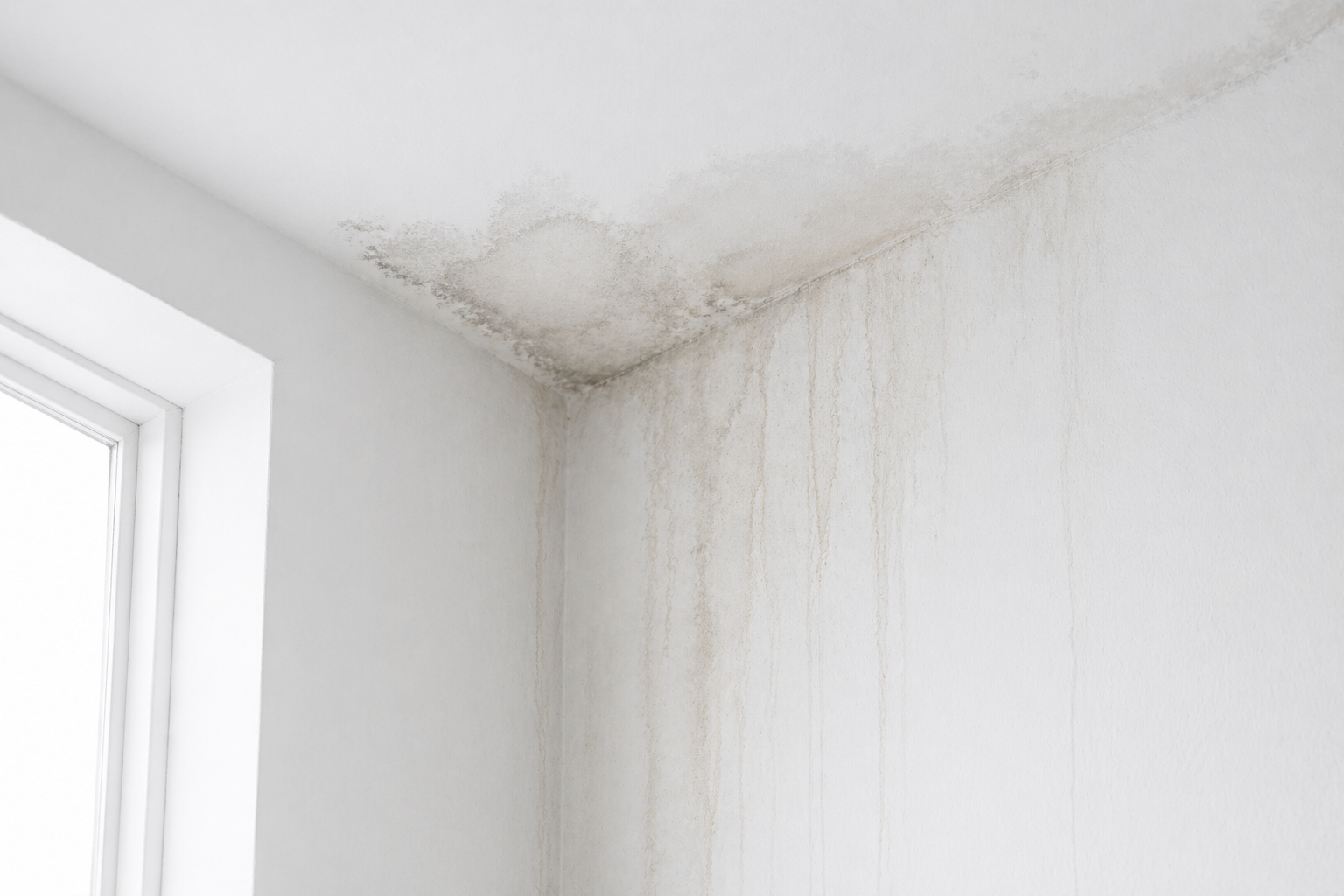
When we see mold, our immediate instinct is to clean it, bleach it, or paint over it. We treat it like a stain. But what if we told you that mold is simply a visible symptom of a much sneakier, invisible problem?
1. A Persistent Musty Odor You Can't Locate
A musty smell that comes and goes, concentrates in one room, or appears when the air conditioning runs is one of the most reliable early indicators of active microbial growth somewhere in the structure. The odor is produced by microbial volatile organic compounds (MVOCs) — gases released by mold colonies as they metabolize organic material in building components.
The key word is persistent. A temporary smell after heavy rain or a brief period of high humidity is not unusual. An odor that returns consistently, especially in the absence of obvious water damage, suggests an ongoing moisture source feeding active growth.
According to the EPA’s guidance on mold and moisture, mold can begin growing on surfaces within 24 to 48 hours of a moisture event — and the odor it produces often precedes any visible sign of the problem.
If you have already cleaned the area and the smell returns, the source is almost certainly not on the surface.
2. Peeling, Bubbling, or Stained Paint
Paint that peels or bubbles without an obvious cause is reacting to moisture moving through the substrate beneath it. This is especially common on exterior-facing walls and ceilings below bathrooms, where condensation, pipe drips, or slow infiltration push moisture into the wall assembly from behind.
The staining pattern matters. A single, clearly defined stain that appeared after a known event — a roof leak, a burst pipe — is a different situation from diffuse discoloration that has appeared gradually or in multiple locations. The latter often indicates a source that is continuous rather than event-driven.
Paint discoloration caused by moisture is documented by the Building Science Corporation as one of the most common visible indicators of vapor-related moisture accumulation in wall assemblies, particularly in hot and humid climates like Florida’s.
If the paint is addressed without identifying and correcting the moisture source, the problem will reappear.
3. Warped, Buckled, or Soft Flooring
Wood flooring, laminate, and engineered wood products absorb moisture from below as readily as from above. When moisture accumulates in a subfloor — from a slow pipe leak, condensation, or ground moisture rising through a crawl space — the flooring above it reacts before any water becomes visible at the surface.
Signs to watch for include:
- Floorboards that have lifted or separated at the joints
- Soft or spongy areas underfoot that were not previously present
- Laminate panels that have swollen or no longer lie flat
- Tile grout that is cracking or discoloring in a pattern that follows moisture pathways
Carpet is particularly deceptive. The Institute of Inspection, Cleaning and Restoration Certification (IICRC) notes in its S500 Standard for Water Damage Restoration that carpet padding can retain significant moisture while the surface feels dry to the touch — creating ideal conditions for microbial growth beneath a floor that appears normal.
4. Condensation on Interior Surfaces
Condensation forms when warm, humid air contacts a surface that is cool enough to bring the air below its dew point. In Florida, this happens frequently on windows, exterior walls, and cold water pipes. When it happens occasionally and dries quickly, it is generally not a structural concern. When it happens consistently, in multiple locations, or leaves visible moisture trails that don’t dry, it indicates a moisture load inside the building that the structure is not managing adequately.
Persistent condensation on interior walls — particularly on exterior-facing surfaces during cooled months when the air conditioning is running — is a sign that warm humid outdoor air is infiltrating the building envelope and condensing against cooler interior surfaces. Over time, this deposits moisture into the wall assembly at the condensation point.
The Florida Building Code’s energy efficiency provisions address vapor control in wall assemblies specifically because Florida’s climate reverses the moisture drive that most building guidance is written for: in Florida, the moisture pressure comes from outside in, not inside out.
5. Allergy or Respiratory Symptoms That Improve When You Leave the Building
This sign is the most frequently dismissed because it seems like a health question rather than a building question. But the pattern is diagnostically significant: symptoms that are consistently worse at home and consistently better elsewhere — whether at work, while traveling, or simply outdoors — suggest an indoor environmental cause.
The American College of Occupational and Environmental Medicine (ACOEM) recognizes dampness and microbial contamination in buildings as a documented cause of respiratory symptoms, including worsening of asthma, persistent cough, eye and throat irritation, and fatigue. These symptoms are produced not only by mold spores but by the MVOCs and mycotoxins that contaminated building materials release into the indoor air.
When a physician has ruled out other causes and the symptom pattern correlates with time spent in the building, a professional indoor air quality assessment is a reasonable and often productive next step.
What to Do If You Recognize These Signs
Noticing one of these signs does not necessarily mean you have a serious moisture problem. It does mean the sign warrants investigation — because the cost of identifying a moisture issue early is significantly lower than the cost of addressing it after mold has established in structural materials.
A professional moisture assessment uses calibrated instrumentation — thermal imaging cameras, moisture meters, and relative humidity sensors — to locate moisture inside building assemblies without opening walls. It produces a documented picture of what is actually present in the structure, which is the starting point for any informed decision about what to do next.
If you are seeing any of these signs in your property, FPT Environmental provides professional moisture mapping and assessment throughout South and Central Florida. Contact us to schedule an assessment.
The American College of Occupational and Environmental Medicine (ACOEM) recognizes dampness and microbial contamination in buildings as a documented cause of respiratory symptoms, including worsening of asthma, persistent cough, eye and throat irritation, and fatigue. These symptoms are produced not only by mold spores but by the MVOCs and mycotoxins that contaminated building materials release into the indoor air.
When a physician has ruled out other causes and the symptom pattern correlates with time spent in the building, a professional indoor air quality assessment is a reasonable and often productive next step.
FPT Environmental LLC provides mold remediation, moisture mapping, indoor air quality testing, and environmental restoration services throughout South and Central Florida. This article is intended for general informational purposes.

Quick Links
About Us
Academy
Services
Products
Financing
Resources
Academy Policy
Privacy Policy
Refund Policy
Let’s Stay Connected
Join our mailing list for expert insights, seasonal property protection strategies, and updates on the latest in indoor air quality technology directly from FPT Environmental.